After everything I have lived through as a patient, I can say this very simply: excellent providers make you feel safer, stronger, and more informed. They do not just treat illness. They help restore dignity.
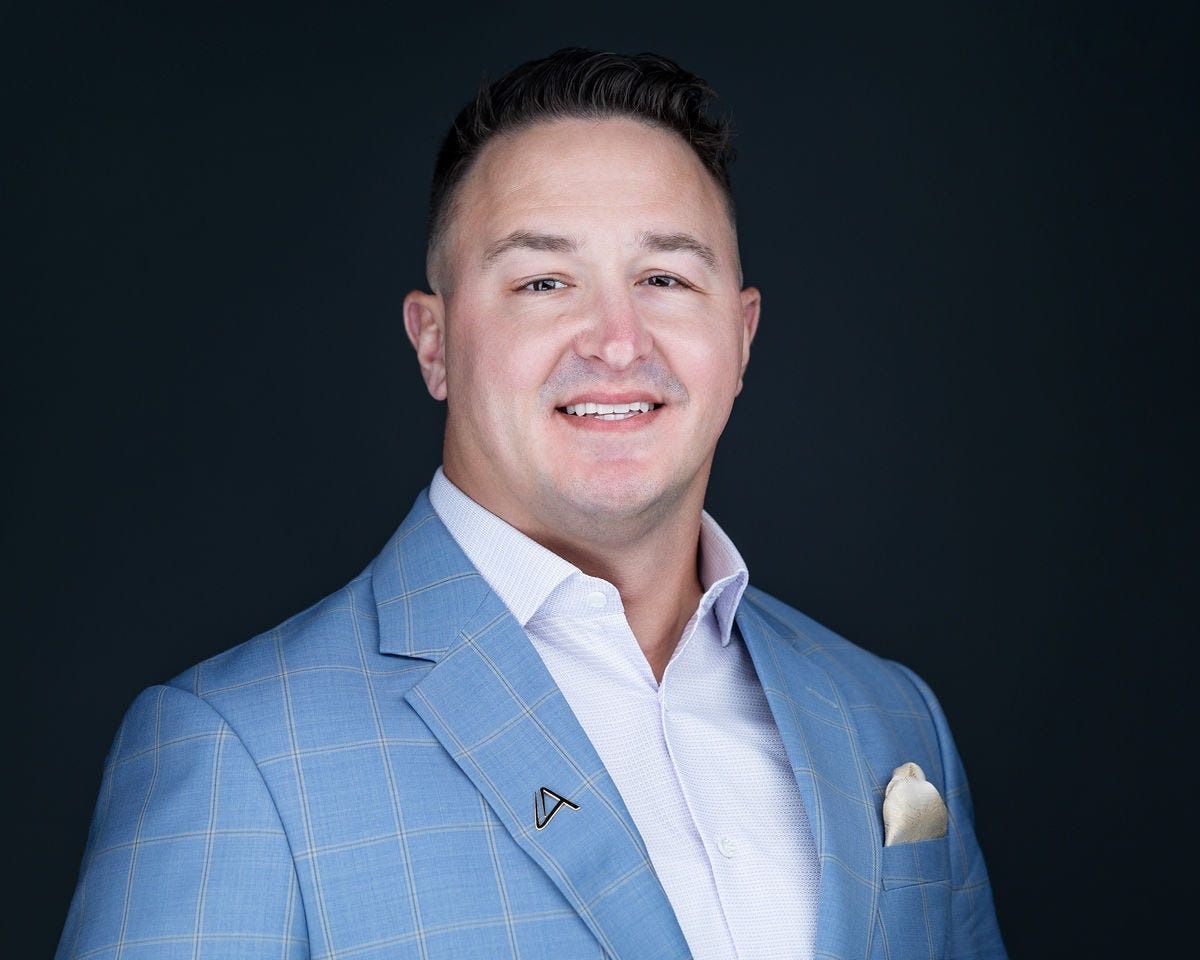
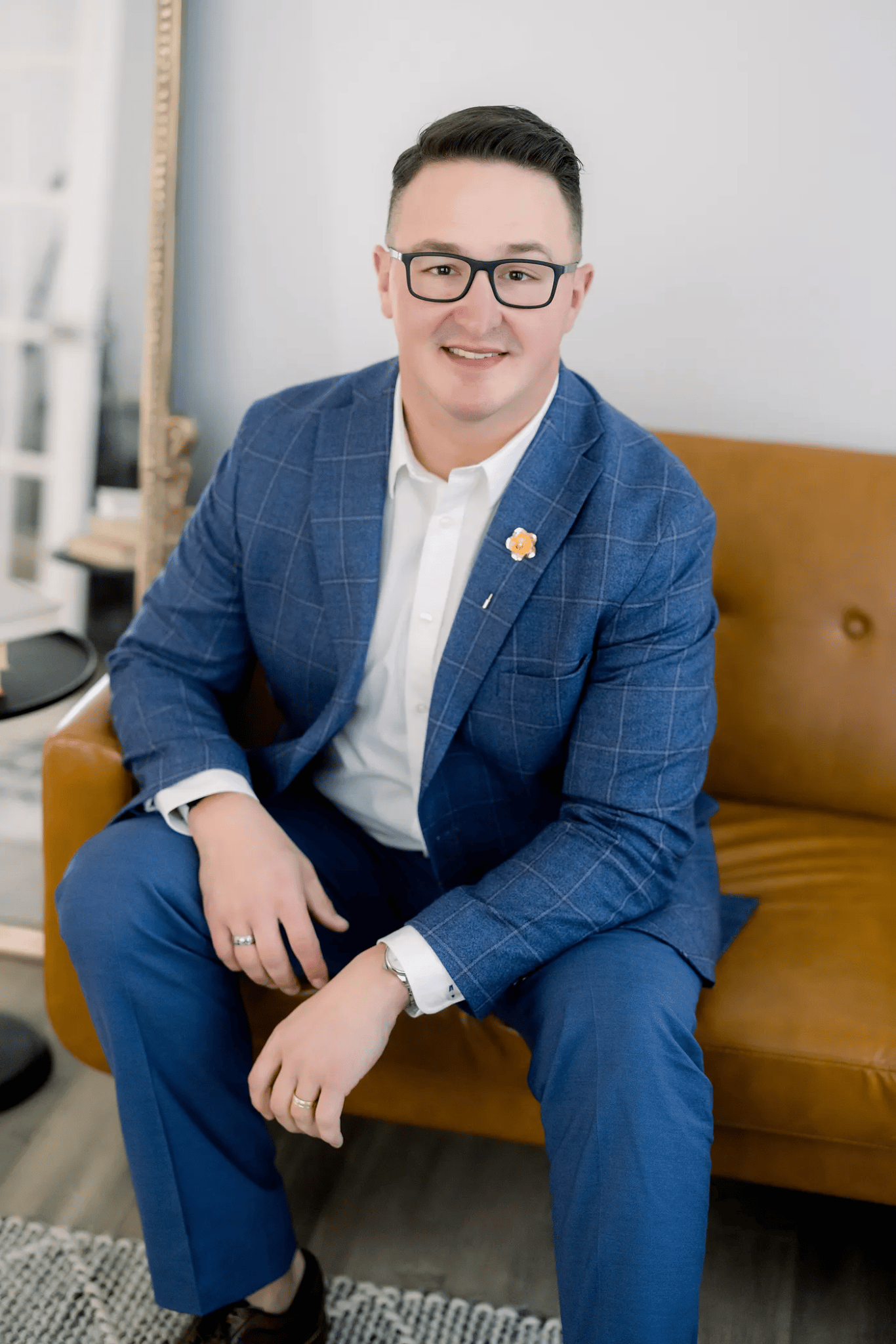
Matt Toresco is a patient advocacy expert and the founder of Archo Advocacy, a market research, training, and consulting firm, which aims to help healthcare companies understand the patient experience to improve outcomes. Matt is the editor-in-chief of ELAVAY, which ranks for-profit healthcare companies on their patient advocacy functions, and the co-founder of We The Patients, a non-profit lobbying for the rights of those with cancer in the United States. He is also a speaker and his TEDx talk on patient advocacy has been viewed more than 1.1 million times.
I broke my neck in 2005. I was playing Division 1 lacrosse at Ohio State. One hit changed everything. I spent the next 20 years managing chronic pain and cycling through opiate prescriptions. I worked in healthcare that entire time. Pharma, genomics, consulting. I sat across the table from executives who talked about putting patients first. I built training programs, launched research reports, and became a partner at a consulting firm. I knew the system from the inside.
And the system still failed me as a patient.
After close to two decades of managing my own pain, an advocate helped me find the right physician. One person with lived experience and the right connections did what the entire industry around me could not. That moment rewired how I see healthcare. Those with lived experience possess knowledge that many in healthcare lack.
I had already been doing the work. I started what would become my advocacy intelligence research in 2017 at a consulting firm in West Chester, PA. I eventually became a partner there. Then, faced with my own mortality, a 14-hour surgery, and deep self-reflection, I decided to bet on myself and go off on my own. I left. I restarted the research from scratch.
That restart became Archo Advocacy. I founded it in 2022 with one conviction: the patient advocacy function inside a healthcare organization can serve as the beacon of hope in more ways than leadership understands. The complexity of the US healthcare system has outpaced the knowledge of many of its own industry experts, leaving patients in the dark. I build the tools, data, and training to change that.
The career path found me the same way it finds most people who end up doing meaningful work. Through pain, through failure, and through one person who showed me what was possible.
The most interesting story of my career did not happen in a boardroom. It happened in a hospital bed.
I suffered a cervical spine injury in 2005. That kicked off 18 years as a patient. I went through 8 spine surgeries. I lived on opioids for years. I saw healthcare from the inside at a level most people never do. My care costs reached roughly $20 million to $25 million over time. I learned what helps patients. I also learned what breaks them.
Then on May 15, 2023, I underwent a 13-hour cervical reconstruction. I woke up pain-free. That moment changed everything. I had spent nearly two decades surviving the healthcare system. Now I could finally build on what I had learned inside it.
That experience shaped my work at Archo Advocacy, ELAVAY, and everything I do around Advocacy Intelligence. I do not study healthcare from a distance. I lived it. I paid for the lessons in pain, time, and persistence. Now I use those lessons to help companies listen better, move faster, and create better outcomes for patients.
Can you share a story about the funniest mistake you made when you were first starting? Can you tell us what lesson you learned from that?
Quite frankly, I would say falling off the stage by missing the stairs. I cannot look down. It was an odd staircase. I was presenting at the Chief Patient Officer Summit, having just spoken to a crowd of about 200 healthcare executives, and the next thing I knew, I was staring at the floor.
That moment showed me a few things. It reminded me that people are willing to assist you if you only let them. It’s a major facet of the EMPWRD patient model, developing your support team. But I was reminded by those individuals who rushed to help me up that it still takes your acceptance of the help to change the circumstances. It was also a reminder of how far resilience can take you and that nobody will remember your falls if you continue with the mission. I got back up and shook hands with those who thanked me for the presentation and were seeking to work with the guy who had just fallen off the stage. So, remember, nobody else remembers your falls, as long as you keep pushing forward with a righteous mission.
Can you please give us your favorite “Life Lesson Quote”? Can you share how that was relevant to you in your life?
I love that quote because it so clearly gave me my why when I was going through opiate withdrawal symptoms, preparing for my last surgery. The surgeon’s mandate was that I be off opiates for six months before he would schedule surgery. The hellish process left much to be desired, and I had plenty of time to think. It was this quote, along with my faith, that got me through it.
I spent 18 years fighting through pain, setbacks, surgeries, dependence on opioids, and a healthcare journey that could have broken me. Instead, it built my conviction. It sharpened my empathy. It gave me a level of resilience I could not have learned any other way. Better yet, it prepared me to give back to the patient I once was and to build a career helping the patient I used to be.
I do not glorify suffering. But I do respect what struggle can produce when you refuse to quit. I say it often; I wouldn’t change a thing about my past. It’s what’s prepared me to take on the mission I have today.
An excellent healthcare provider combines skill, judgment, humility, and humanity. They don’t see the individual across from them as a patient, but rather a customer they can learn from.
They know their craft. They communicate clearly. They tell the truth even when the truth feels hard. They listen without rushing. They look at the whole person, not just the chart, the scan, or the billing code.
For me, excellence in healthcare starts with trust. Patients need to feel seen, heard, and respected. They need a provider who can say, “I believe you. I understand what is at stake. Here is the plan.”
The best providers also stay curious. They do not let ego drive the room. They ask better questions. They work across teams. They understand that great care does not stop at diagnosis. Great care helps people navigate what comes next. Great providers recognize that what the patient has not told them cannot be used to generate their diagnosis and understand that effective conversations are paramount to better patient outcomes.
After everything I have lived through as a patient, I can say this very simply: excellent providers make you feel safer, stronger, and more informed. They do not just treat illness. They help restore dignity.
What are your favorite books, podcasts, or resources that inspire you to be a better healthcare leader? Can you explain why you like them?
A few resources have shaped how I think and lead.
First, I value patient communities more than almost any formal resource. Real patients tell you what market reports often miss. They tell you where the friction lives. They tell you what language lands and what language fails. If you want to lead well in healthcare, listen to where people speak honestly.
Second, I gravitate toward books about resilience, leadership, clear thinking, and, of course, my Christian faith. I appreciate voices like Simon Sinek because they push leaders to start with purpose, not ego. I also like thinkers who can make hard ideas simple and useful for the masses.
Third, I learn a lot from operator-driven podcasts and founder conversations, even outside healthcare. Good business is good business. I want to hear how smart people make decisions, build trust, cut waste, and create momentum.
That said, my biggest source of insight is still lived experience. Eighteen years as a patient taught me to lead with urgency, empathy, and accountability. That perspective shapes every article I write, every client conversation I have, and every framework I build.
Are you working on any exciting new projects now? How do you think that will help people?
Yes. I am building several things that all connect to one core mission: Ensure the patient voice is at the center of all healthcare organizations and healthcare decision-making. Whether empowering patients to be heard or assisting healthcare professionals and companies in listening and acting, the patient voice is paramount to successful healthcare outcomes.
One major focus is growing ELAVAY and the BIOADVOCATE Benchmark Report. That work gives pharma and biotech leaders real data on how patient advocacy functions operate, where the gaps are, and what strong execution looks like.
I am also expanding Archo Advocacy’s consulting and training work, especially around the ACE Model: Access, Credibility, and Execution. I built that model to help teams move advocacy from a nice idea to an operational discipline and ensure market access and key account management teams maximize their success in a highly integrated world.
Other projects I am excited about are the AdvocateBridge and the EMPWRD Patient Record. AdvocateBridge aims to connect patients with organizations that can support. The EMPWRD Patient Masterclass and Record are focused on educating and empowering patients to be better prepared to engage in the healthcare economy through both a structured training program and smartphone application. The Record allows patients to track symptoms daily, summarize their own data, and synthesize questions to ask their physician about their health. When you can come alongside a patient early in the process, it’s amazing to see how different their reality can be.
At the highest level, all of this supports the same goal. I want to help build a healthcare system where educated patients and responsible organizations (companies or hospitals/health systems) work together to remove barriers to care. If we do that well, we help people get access sooner, make better decisions, and live better lives.
Ok, thank you for that. Let’s now jump to the main focus of our interview. According to this study cited by NBC, the US healthcare system is ranked as the worst among high-income nations. This seems shocking. Can you share with us a few reasons why you think the US is ranked so poorly?
I do not find that ranking shocking. I find it honest.
The United States spends more on healthcare than countries of similar size, yet still ranks last among the top 10 high-income countries. That gap tells you the problem is not effort alone. It is design.
First, we built a system that makes access too hard. Too many people delay care because of cost. Too many people carry insurance yet cannot afford to use. As I like to say, “these days, paying your insurance premium only gives you the opportunity to pay your deductible. For a family of four, that could be $40,000–$50,000 before insurance even kicks in.” We have a pervasive insurance system that is increasingly expensive and still too costly to use when you need it, leaving patients underinsured or uninsured. Gone are the days of truly affordable health insurance.
Second, we reward volume, complexity, and middlemen more than clarity, prevention, and outcomes. We built a machine that moves money well but does not always care well. Patients feel that every day. They spend hours chasing prior authorizations, refills, appointments, and answers when they should spend that energy getting better.
Third, we do a poor job connecting medical care to real life. Health does not live inside a hospital or clinic. Social determinants of health are pervasive and often ignored — poverty, food insecurity, transportation gaps, unstable housing, addiction, and violence all shape outcomes. Yet hospitals and physicians do not involve themselves in the personal lives of their patients to even know what could be impacting their health where they live.
Fourth, we burn out the people we need most. A strained system cannot produce great care at scale. When physicians and nurses work short-staffed, overloaded, and buried in bureaucracy, patient care suffers. That is not a character flaw in clinicians — that is a system failure. The average length of a patient visit with a physician is 7–8 minutes. How can you gather enough information about a patient in that timeframe to make an accurate diagnosis that a patient can understand, not to mention treat it appropriately in that short a time window?
At the highest level, I think the U.S. ranks poorly because we confuse activity with performance. We do a lot. We spend a lot. We bill a lot. But we do not consistently make care easier, faster, more humane, or more effective for the person living with the problem. As you will hear, we do not have healthcare; we have sick care.
As a “healthcare insider”, if you had the power to make a change, can you share 5 changes that need to be made to improve the overall US healthcare system?
1. Make care easier to access and more affordable. I spent years living through a system where every next step felt like a fight. When a patient with serious pain or a complex condition has to weigh a bill, call an insurer three times, and still wonder if treatment will get approved, the system has already failed.
2. Rebuild primary care and patient navigation. Most patients do not need more noise. They need a trusted quarterback — one person or team who helps them understand the plan, sequence the next steps, and catch problems early. During my own healthcare journey, the hardest moments often came between visits, not during them. A scan might be done. A referral might get placed. Then the patient goes home and sits in fear, pain, and uncertainty while nobody connects the dots. Strong primary care and navigation can close that gap. Unfortunately, primary care physicians are the lowest-compensated provider type, yet they are in the greatest need.
3. Remove administrative waste, especially focused on prior authorization reform. Prior authorizations, duplicate forms, fragmented records, and endless back-and-forth crush patients and clinicians alike. We not only spend the most on healthcare in the US, but we also spend the most on administrative services like prior authorization, with about 25% of spending going to administrative tasks — costing US citizens tens of billions of dollars annually.
4. Tie incentives to outcomes that matter to patients. I would ask better questions. Did the patient get access faster? Did pain drop? Did function improve? Did the treatment plan hold up in real life? Did the family understand what came next? Too often, the system celebrates completion of a process while the patient still struggles.
5. Treat the patient voice as operating intelligence, not as a marketing prop. Patients can tell you where access breaks, where language confuses, where trust falls apart, and where support disappears. If ten patients tell you they got lost after a diagnosis because nobody explained the next step in plain English, that is operational data. If leaders listen early and act quickly, they can fix issues before they lead to denials, abandonment, worsening disease, or avoidable costs.
How do you think we can address the problem of physician shortages?
We need to treat physician shortages like a national security issue, because it is. First, expand graduate medical education. If we do not increase residency slots, we will keep training talent in a bottleneck. Second, build stronger pipelines into medicine from rural, underserved, and nontraditional communities. People often stay close to where they train. Third, use team-based care better. Let physicians practice at the top of their license and let advanced practice providers, navigators, pharmacists, and care coordinators carry the work they can carry well. Fourth, reduce the nonsense that wastes physician time. A clinician who spends hours on bureaucracy every week does not actually have full clinical capacity.
How do you think we can address the issue of physician and nurse burnout?
Burnout usually grows in broken environments. The American Hospital Association highlighted several major drivers of burnout in a 2024 review of clinician data. Staffing shortages stood out as the top factor for both physicians and nurses. Bureaucratic tasks, chaotic workplaces, lack of workload control, and after-hours work due to overly booked schedules all contribute. None of those problems gets solved by telling a nurse to meditate harder. I would lean into staffing and technology, put control back in providers’ hands, and ensure providers feel comfortable speaking up without being punished by leadership.
You are a person of great influence. If you could inspire a movement that would bring the most amount of good to the most amount of people, what would that be?
I would build a movement around educated patients and accountable systems — exactly what I am building with the EMPWRD Patient Method and the Fusion Formula. When patients understand their condition, their options, and their rights, they make better decisions. When companies, providers, and institutions face real accountability for access, communication, and outcomes, they perform better. Put those two forces together, and you can lower barriers to care at scale. The patient voice is not soft intelligence — it is strategic intelligence. It should shape how healthcare gets designed, delivered, measured, and improved.
How can our readers further follow your work online?
For company, consulting, market research, and publishing work, visit archo.io. For personal platform, the EMPWRD Patient, FUSION Formula, speaking, and broader thought leadership, visit matttoresco.com. Also on LinkedIn, X, Instagram, and TikTok at @matttoresco.
Originally published in Authority Magazine. Read on The Archo Advocate Brief.